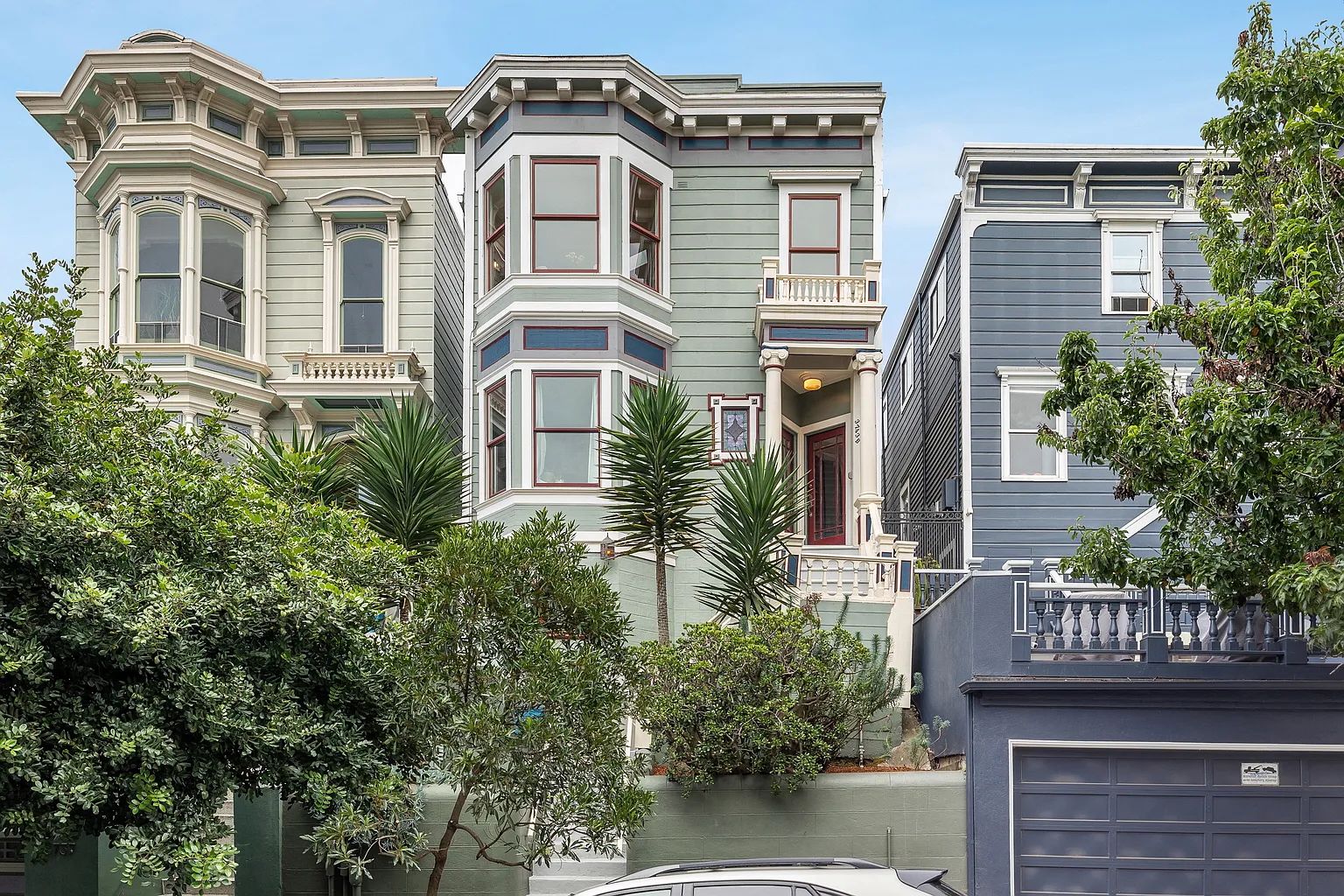
Welcome. This guide has everything you need for your stay — the story of the house, where to eat, how to get around, and what's nearby.
The House
A shipwright's home, built to last
In 1865, a man who built ships built himself a house. Edward Doyle was a shipwright — born around 1830 on Prince Edward Island, Canada, one of the most active wooden shipbuilding centers in the British Empire. Between 1800 and 1880, PEI launched roughly 4,000 vessels. Doyle learned his trade there, then made his way to San Francisco, likely drawn by the same forces that pulled thousands of Maritime Canadians westward: the Gold Rush, and the insatiable demand for ships.
By 1864, the San Francisco city directory lists him: "Doyle Edward, ship-carpenter, dwl S s Twentieth bet Dolores and Guerrero." No house number yet — the street was still being numbered. He was already living here, on the south side of 20th Street, in what was then a quiet residential neighborhood on the outskirts of the city.
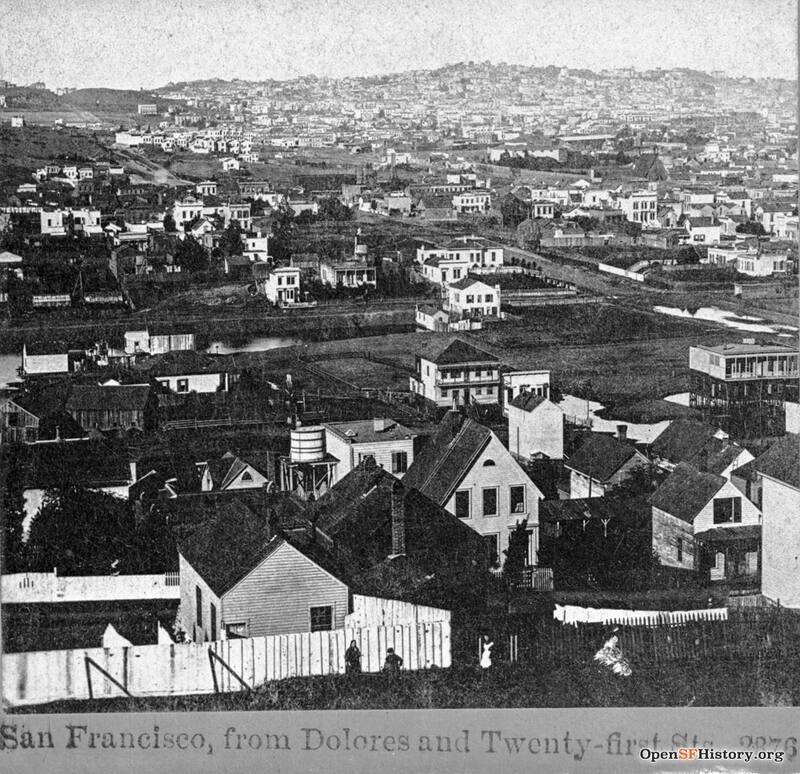
The house he built used balloon frame construction — a technique where continuous redwood timbers run from the foundation all the way to the roof, creating a single structural skeleton. It was revolutionary for its time, and the old-growth redwood he chose was naturally resistant to rot, insects, and fire. A shipwright would have known exactly which wood to use and how to frame it. The same structural principles that kept a ship together in Pacific swells would keep this house standing for 160 years.
The Matthew Turner connection
The 1879 city directory reveals something remarkable: "Doyle Edward, shipscarpenter Mathew Turner, r. 1019 Twentieth." Edward Doyle worked for Matthew Turner — the most prolific individual shipbuilder in American history. Turner built more than 270 vessels in his career, more than any other American.
Turner was known for speed innovations — sharp bows, modified rigging. His brigantine Galilee held the San Francisco-to-Tahiti speed record. Today, a modern tall ship named the Matthew Turner sails San Francisco Bay as an educational vessel, built in Sausalito between 2013 and 2017.
Doyle commuted from 20th Street to the waterfront yards — a straight shot southeast, first on foot or horseback, later by streetcar. He chose this location deliberately: solid ground, away from the filled land and industrial grime of the waterfront, but close enough to get to work.
Four earthquakes
The house has survived every major earthquake to hit San Francisco:
1865 — A significant earthquake struck just months after construction, the same quake Mark Twain famously witnessed and wrote about. The new wood-frame house flexed rather than cracked.
1868 — A magnitude 6.8 earthquake on the Hayward Fault, known as "the great San Francisco earthquake" until 1906 replaced it.
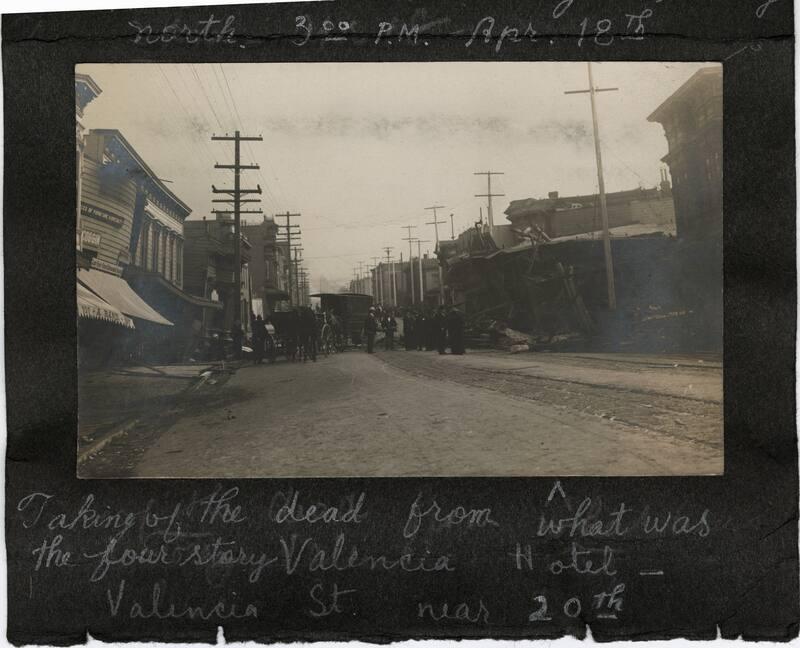
1906 — The big one. Magnitude 7.9, followed by three days of fire that destroyed 80% of the city. The house survived both.
1989 — The Loma Prieta earthquake, magnitude 6.9. The house survived again.
A key reason: the house sits on solid ground, not on filled land. During the 1906 earthquake, the Valencia Street Hotel sank into the street before collapsing. Houses on filled land north and east of here sank or collapsed. 3743 20th Street stands on bedrock.
April 18, 1906: The fire stops here
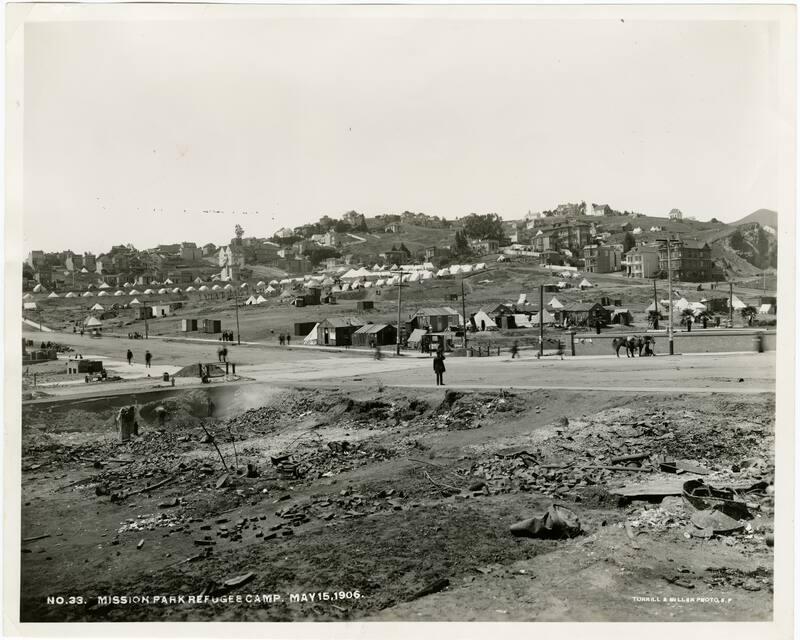
At 5:12 a.m., the earthquake struck. By the second day, a massive firestorm was advancing toward 20th Street. Water mains throughout the city had shattered. Every hydrant the firefighters tried was dry.
Then someone found one that worked.
A single hydrant at the corner of Church and 20th Streets — two blocks from this house — still had pressure. It became known as "Little Giant." Exhausted horses couldn't pull the steam engines up the steep Dolores Street hill, so hundreds of residents grabbed ropes and hauled them up by hand. For seven hours, they fought the fire along 20th Street.
The south side of 20th held. The north side burned. You can still see the difference today: the surviving Victorian homes on this side of the street, and the rebuilt Edwardian homes across it.
The Golden Hydrant
That miraculous hydrant still stands at Church and 20th — a 2-minute walk from the front door. Since the late 1960s, it has been painted gold. Every April 18 at 5:12 a.m., the exact minute the earthquake struck, a ceremony begins at Lotta's Fountain downtown. A procession then walks to the hydrant, where the Fire Chief and local residents repaint it gold.
The hydrant is credited with saving the Mission District and preserving San Francisco's oldest surviving Victorian homes — including this one.
Liberty Hill Historic District
The house sits within the Liberty Hill Historic District, designated as a San Francisco landmark on October 25, 1985. About 70% of the buildings are Victorian: 42% Italianate, 20% Stick, 8% Queen Anne. There are 163 contributing buildings, roughly a third of them architect-designed.
The district is associated with José de Jesús Noé (the last alcalde of San Francisco under Spanish sovereignty) and Washington Bartlett (the first mayor under American rule). Suffragette Susan B. Anthony attended an organizing meeting at 159 Liberty Street in 1896.
3743 20th Street and its neighbor at 3747 are among the oldest surviving homes on the block.
Edward Doyle's later years
The 1870 Census fills in more detail: Edward (40), wife Mary (46, born New Brunswick), and a boarder named James Tucker (25, plasterer, from Nova Scotia). Three Maritime Canadians under one roof. Edward's real estate was valued at $9,000, his occupation listed as Shipwright.

The 1901 directory still lists him as "ship carpenter" at 3743 20th — at approximately 71 years old, still working his trade. He disappears from the directory after 1908, likely passing away around age 78. By 1912, the house had passed to new owners.
A man who built ships built a house that wouldn't sink. It's still standing.
Neighborhood Map
Where to Eat
All walking distance or a short rideshare from the house. These are our picks — not a complete list, just the places we'd actually send a friend.
Quick morning starts
Brunch
Dinner
Getting Around
Practical Info
The stairway
The house is set above the street — there are about 30 steps from the sidewalk to the front door. It's a bit of a climb, but the views from the top are worth it.
Nearby essentials
Walk to the Golden Hydrant
The hydrant that saved the neighborhood in 1906 is at the corner of Church and 20th Streets — a 2-minute walk west from the front door. From there, cross to the top of Dolores Park for panoramic views of the downtown skyline, the Mission District, and on a clear day, the East Bay hills.